A strong risk management strategy can insulate your procurement goals and protect against the dangers that threaten your plans. Here are insider tips to help you develop a risk management strategy in procurement:
Why a Risk Management Strategy Is Critical in Procurement
A risk management strategy is critical to avoid the risks that naturally surface throughout the day. Issues like contract noncompliance, procurement fraud, unplanned losses, supply chain disruptions, and more can hit your operation at any time.
Still, some factors can increase your procurement team’s risk exposure. For instance, if your operation includes a high level of rogue spending or your teams are bogged down by inefficient procure-to-pay (P2P) processes, your risk can leap higher. A solid risk management strategy will help you identify the most urgent risks sprinkled throughout your procurement operation and plan to protect against them.
Tips to Improve Your Risk Management Strategy in Procurement
Here are a few tips to help you build a risk management strategy in procurement:
1. Increase Spend Under Management
Uncontrolled spend can drive your procurement risks higher. The more rogue spend occurring outside of your approved channels (potentially through unapproved suppliers), the easier it is for suppliers to overcharge your company—whether they mean to or not.
By increasing spend under management, you’ll be able to see spending patterns, red flags, and new strategic sourcing opportunities. That all drives down your procurement risk profile.
Are you wondering how to improve spend under management?
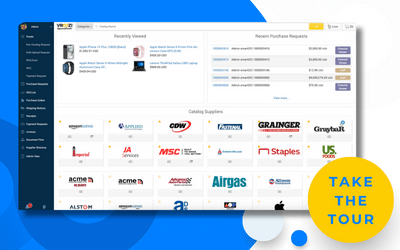
The easiest way is to adopt an e-procurement solution that features a centralized digital marketplace. This makes it easy for employees to browse goods and services, purchase within your digital payment system, and buy from approved suppliers. Additionally, a marketplace allows your team to capture spend data and ensure employees only purchase with the suppliers you’ve built relationships with.
2. Widen Spend Visibility
It’s impossible to cut down risks when you can’t see them. That’s why one critical step toward building a strong risk management strategy is widening spend visibility. This is another instance in which e-procurement solutions can help. For one, these solutions pull spend data into a centralized place, so you can see how the company is spending, what contracts suppliers are upholding, and who the company is working with. It also makes it easier to reduce contract noncompliance, identify losses that would otherwise pile up, and eliminate fraud.
3. Protect Against Supply Chain Disruption
Supply chain disruptions are inevitable, but some factors can expose your company to significant damage when disruptions hit. For instance, if you’re not actively collaborating with suppliers—and ensuring they can confirm or dispute each order—it may not be clear whether orders will be completed as expected. This lack of communication can cause unexpected hold ups that pile up, prevent your operation from ordering from alternative suppliers, and disrupt your whole business.
You can build supply chain resilience by embracing SpendTech™, or spend management technology. This technology enables suppliers to immediately tell you if an order can be fulfilled as expected. Additionally, by automating the P2P process, you can improve cycle times and trim down your inventory needs—lowering your reliance on shaky supply chains.

4. Reduce Fraud Exposure
Procurement fraud can derail your team’s plans and wreck your reputation. Spend data often appears in a rearview mirror, and the less visibility, the easier it is for intentional—or unintentional—fraudulent charges to crash into your company’s bottom line. The easiest way to minimize fraud exposure is to adopt automated technology. Broadly speaking, P2P solutions cut down fraud exposure in two ways:
- Anomaly detection: By shining light on spend data, you can spot any suspicious behaviors, step in, and stop fraud before it damages your company.
- Automation: Advanced P2P solutions will use AI and machine learning to identify errors and mismatches in your P2P processes. They also include machine learning that will match invoices to orders and identify spending signals that indicate fraud.
5. Minimize Errors and Payment Delays
A final—but critical—way to lower procurement risk and build a strong risk management strategy is to refine your P2P processes. Any time errors and delays are baked into your processes, it delays the data you can review. As a result, you could easily make budgeting errors, poor sourcing decisions, or other mistakes that can jeopardize your organization’s financial future.
P2P solutions cut down the number of human touch points within your processes, automate two and three-way matching, and streamline workflows. All of this can reduce errors, increase on-time payments, and allow you to seize more supplier discounts. In turn, you’ll have more accurate spend data at your fingertips and more time to focus on strategic initiatives.
Start Fortifying Your Risk Management Strategy
You can strengthen your risk management strategy and keep your procurement plans plowing forward with the right technology. But to improve spend under management and decrease risk, you’ll need your employees to adopt that technology and use it regularly.
Read our resource, “Procurement Checklist: How to Boost Employee Adoption of Technology and Maximize Value,” to learn the secrets to getting your employees to jump into your digital procurement solution without hesitation.