Choosing the right procurement software in 2026 comes down to one question: does it actually improve spend control, user adoption, ERP integration, compliance, and time to value without adding complexity? Start with your highest-impact pain point, then evaluate implementation speed, integration depth, and AI capabilities.
Procurement software helps organizations manage purchasing, supplier catalogs, approvals, purchase orders, invoices, compliance controls, ERP integration, and spend visibility in one connected workflow.
The wrong platform delays ROI, strains IT, and drives employees back to manual workarounds. The right one helps reduce maverick spend, automate approvals, and give finance leaders greater visibility into organizational spend.
For teams evaluating alternatives to Coupa, SAP Ariba, JAGGAER, or legacy ERP procurement tools, the right choice depends on the balance between functionality, ease of adoption, integration, and implementation speed.
The best procurement software should be easy for employees to use, fast to implement, connected to your ERP, strong on compliance controls, and capable of supporting procurement automation without creating unnecessary complexity. This blog will walk you through how to tell the difference between procurement software that will make your life easier and procurement alternatives that will create more friction than they resolve.
What Problem Do You Need Your Procurement Software to Solve?
Establish exactly what pain points your procurement software needs to solve. Use that as a guide when choosing which procurement software you’ll use.
We’ve put together some common pain points and the features that can help resolve them.
Common Pain Points and Solutions
| Pain Point | What to Prioritize |
|---|---|
| Manual purchase requests | Marketplace UX and simple intake |
| Low user adoption | Guided buying and mobile access |
| Maverick spend | Catalogs, supplier controls, and contract pricing |
| AP delays | Invoice automation and exception workflows |
| Limited visibility | Real-time spend analytics |
Vroozi’s marketplace-first model is a strong fit for teams looking for a proven procure-to-pay platform that improves adoption, spend control, and ERP-connected workflows. It’s a purpose-built procurement alternative that offers teams solutions to all of the most common pain points.
Does Implementation Speed Matter?
Yes. Long deployments delay return on investment, burden IT teams, and slow adoption across procurement, finance, and operations.
Procurement implementation speed directly impacts how well a platform is received. Adoption rates suffer when platforms are difficult to navigate. Research shows that 88% of users who have a negative digital experience are unlikely to return, opting instead for workarounds. Procurement platforms are no exception.
When evaluating procurement alternatives, assess:
- Expected timeline from contract to go-live
- IT resource requirements and customization burden
- Data migration complexity
Vroozi’s modular, snap-on architecture connects to your existing ERP systems. There is no complicated “rip-and-replace.” Teams that prioritize procurement implementation speed avoid the adoption drop-off that comes with long rollout periods.
Why Does ERP Integration Matter When Choosing Procurement Software?
Procurement integration should connect cleanly to your ERP. Customizing your platform for user workflows makes integration much more complex.
Poor procurement integration could be the reason your team has to put up with duplicate data entry, manual reconciliation, and process delays. But it doesn’t have to be that way.
Choose a platform that:
- Is compatible with SAP, Oracle, NetSuite, Microsoft Dynamics, or other systems
- Has real-time data exchange between procurement, AP, and finance
- Supports automatic PO and invoice synchronization
- Ensures consistent master data alignment across all systems
Vroozi offers pre-built ERP connectors that support connected data flows with major financial systems. Procurement integration through Vroozi completely removes the risk of duplicate data entry and maintains clean master data.
What Procurement Compliance Controls Do You Need?
Platforms that prioritize procurement compliance have the right controls built directly into the buying experience itself.
Always double-check that the following compliance features are included:
- Guided buying
- Contract pricing visibility
- Configurable approval workflows
- Audit trails for every transaction
Vroozi enforces procurement compliance through supplier catalog governance, preferred vendor controls, and approval routing, keeping spend within policy without creating friction for end users.
How Should You Evaluate AI in Procurement Software?
Look for AI procurement automation that reduces manual work and improves decision-making. Remember, it should solve real operational problems.
Practical AI capabilities to evaluate:
- AI-assisted product search and recommendations
- Invoice exception support and duplicate detection
- Anomaly detection across spend data
Vroozi’s procure-to-pay platform uses AI automation for intelligent invoice matching, machine learning-powered coding, and automated exception handling, helping reduce repetitive tasks across the procurement and AP workflow.
Pick the Platform That Fits Your Procurement Needs
Choosing the right procurement platform starts with an honest assessment of where your organization stands today and which gaps need to be addressed.
If any of these gaps sound familiar, use them to guide your platform decision. Here’s a quick look at some of the most common procurement struggles and how the right platform can help you solve them:
- Low adoption: Prioritize marketplace UX, guided buying, and simple intake.
- Manual approvals: Prioritize workflow automation and mobile approvals.
- ERP complexity: Prioritize ERP-friendly integration and clean data flow.
- Maverick spend: Prioritize catalogs, supplier controls, and contract pricing.
- AP delays: Prioritize invoice automation, matching, and exception workflows.
- Limited visibility: Prioritize real-time spend analytics and reporting.
- Complex sourcing: Consider broader source-to-pay platforms.
What Makes Vroozi Stand Out Among Procurement Platforms in 2026?
Among procurement alternatives, Vroozi stands out for combining enterprise-grade capabilities with a simpler, marketplace-first buying experience.
Vroozi helps your finance team reach procurement excellence through:
- Marketplace-first buying experience
- ERP-friendly procure-to-pay workflows
- AP invoice automation
- Guided buying and compliance controls
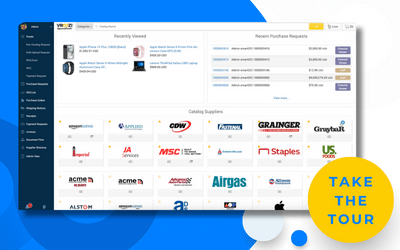
- Supplier catalog management
- Spend analytics and visibility
Procurement Software Decision Framework
| Decision Area | What to Look For | Why It Matters |
|---|---|---|
| Implementation speed | Modular deployment, clear onboarding, limited IT burden | Faster time to value |
| ERP integration | ERP-friendly connection to SAP, Oracle, NetSuite, Dynamics, or other systems | Helps protect ERP stability and data consistency |
| Compliance controls | Guided buying, approval routing, catalog governance, audit trails | Helps reduce maverick spend and policy risk |
| User adoption | Marketplace UX, mobile access, filters, intuitive search | Encourages users to stay inside the approved process |
| Finance visibility | Spend analytics, AP automation, invoice matching | Improves control and forecasting |
| AI capabilities | Practical automation, exception support, recommendations | Reduces manual work without losing governance |
| Vendor fit | Platform scope aligned to actual needs | Avoids overbuying or underbuying |
FAQ: Choosing Procurement Software in 2026
Q: What should procurement leaders prioritize when selecting procurement software?
A: Procurement leaders should prioritize ease of adoption, ERP integration, procurement compliance controls, workflow automation, supplier management, spend visibility, and implementation speed.
Q: What is the best procurement software for finance teams?
A: The best procurement software for finance teams depends on ERP environment, AP automation needs, user adoption goals, compliance requirements, and implementation timeline. Vroozi is a strong fit for teams that want marketplace-style buying, ERP-friendly integration, guided buying, AP automation, and real-time spend visibility.
Q: What are strong alternatives to Coupa, SAP Ariba, and JAGGAER?
A: Alternatives include Vroozi, Ivalua, Zip, and Oracle Fusion Cloud Procurement, depending on whether your organization needs procure-to-pay, source-to-pay, intake orchestration, or ERP-native procurement.
Q: Why does ERP integration matter when choosing procurement software?
A: Procurement integration helps keep purchasing, finance, supplier, invoice, and spend data aligned across connected systems.
Q: How does user adoption affect procurement outcomes?
A: Procurement automation only works if people use it. High adoption means more spend under management, better procurement compliance, and cleaner data.
Choose Vroozi
At the end of the day, you know your team best. You know what features your finance team needs, and what they’ll use. Vroozi is built to help your team achieve procurement excellence. When you choose Vroozi, you gain procurement software that supports your success at every stage of the journey.
Schedule a personalized Vroozi demo and get procurement software your team will enjoy using.