Navigating B2B eCommerce processes can be quite daunting. All you want to do is buy critical supplies for your department, but instead, you have to wade through complex purchase process documentation that seems impossible to decipher. Ever felt like “punching” your way through those PunchOut catalogs, invoices, purchase orders, and the myriad other Excel sheets being thrown at you? Don’t worry; we have got you covered!
This article breaks down the differences between PunchOut and traditional hosted catalogs, shedding light on how they influence purchasing decisions, costs, and timelines.
Key Highlights
- Catalogs in B2B eCommerce serve as detailed online products and services data tailored for complex purchasing needs.
- Hosted Catalogs are stored within the buyer’s procurement system, offering a workflow-integrated and data-enrichment content management approach with updates.
- PunchOut Catalogs direct users to supplier-managed eCommerce sites with real-time product and pricing, ensuring accuracy and flexibility.
- Hosted catalogs may lag in updating item information and prices, while PunchOut catalogs always reflect current supplier data.
- Hosted catalogs are simpler to integrate but require buyer-side management, whereas PunchOut catalogs reduce maintenance but are challenging to regulate.
- Vroozi combines the strengths of hosted and PunchOut catalogs, empowering procurement teams with streamlined workflows, reduced errors, and centralized expertise.
What are Catalogs in B2B ecommerce?
In B2B eCommerce, the term “catalog” indicates a data collection of products or services that enable digital transactions. Think of it as the online equivalent of a printed catalog but tailored to meet an organization’s more complex purchasing needs. Alongside detailed information about each product, such as specifications and pricing, it includes features like bulk pricing, availability, and ordering options. The catalog can be accessed either on the supplier’s website or through the buyer’s procurement software.
Example catalog of Grainger—Industrial products supplier in the USA
What Are Hosted and PunchOut Catalogs?
If you access catalogs from your procurement system, you will find two main types — hosted and PunchOut.
Hosted catalogs
Hosted catalogs are stored directly within your procurement system. The supplier delivers the product and service information by upload or integration, and you can access the catalog as part of your existing workflow.
Here’s how it works:
- Companies curate catalog content from approved, preferred, and contracted suppliers.
- You check item information in your procurement software.
- You select the items you want to purchase and generate a purchase request document.
- The manager approves the document and creates a purchase order.
- You send the purchase order to the supplier and receive the goods .
- The Accounts Payable team pays the invoice based on the approved amounts and quantities received .
PunchOut catalogs
PunchOut catalogs integrate the procurement system with the supplier’s website through a secure link. Once you browse and select products, items from your shopping cart must be transferred back to your procurement system for approval and processing.
Here’s how it works:
- You “PunchOut” to the supplier website using a secure login.
- After you select the items you want to purchase and check out, your cart data is automatically transferred back to your procurement software.
- The manager approves the document and creates a purchase order.
- You email the purchase order to the supplier and receive the products. The Accounts team pays the invoice after matching the invoice to the expected pricing and quantity received.
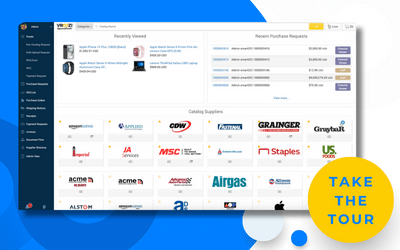
The below image shows the difference between hosted and PunchOut catalog items in Vroozi software.
PunchOut Catalogs vs. Regular Hosted Catalogs — Key differences
PunchOut catalogs and hosted catalogs primarily differ in data storage and management.
Item information
Hosted catalog item data is transferred from the supplier. If the supplier changes item details, like price or specification changes, the information may not be updated immediately in your procurement system. Sometimes, this can result in out-of-stock items added to the cart or a price difference in the final invoice.
In contrast, PunchOut catalog item data is always up-to-date, as the information comes straight from the supplier’s website. There is a significant reduction in downstream process delays eg: due to price differences.
Item pricing
Hosted catalog pricing is based on the price at the last update. In contrast, the supplier has more control over pricing and promotional information in the PunchOut catalog. They can offer discounts, promotional codes, and clearance sales. You may get deals and offers on PunchOut catalogs that you wouldn’t get with hosted ones, but it also means your employees could purchase items outside of agreed-upon contracts.
We summarize the pros and cons of both catalogs in relation to product listing below.
| PunchOut Catalogs | Hosted Catalogs | |
|
Pros |
|
|
|
Cons |
|
|
Implementation
Integrating PunchOut systems in procurement software is not a simple task. Ideally, you want procurement software to automatically import cart data from third-party systems and automate further steps in the purchase process. When suppliers offer PunchOut, they may require order, invoice, and other document integration. Plus, data must sometimes be synchronized with ERP systems, such as material masters, categories, and accounting.
Hence, PunchOut requires close collaboration between the procurement software team and your vendors. For example, Vroozi supplier onboarding services work with suppliers to set up your account, integrate catalog data and documents, and test everything. Every procurement software may not have the same level of hands-on onboarding services.

Buyer-side management
Buyers manage and maintain hosted catalogs with supplier collaboration. When suppliers make pricing or other changes to their catalogs, they publish them to their buyers or buyers’ systems. This usually means an administrator and/or category manager from your company has to review and approve the changes before they are visible to employees in the procurement software. PunchOut catalogs require no such management, as changes are directly visible to the employees.
We summarize the pros and cons of both catalogs in relation to implementation below.
| PunchOut Catalogs | Hosted Catalogs | |
| Pros |
|
|
| Cons |
|
|
The Vroozi Difference
Vroozi implements both hosted and PunchOut catalogs in a way that enhances the benefits of both and reduces the limitations.
With Vroozi’s PunchOut integration, you can shop directly on dynamic, supplier-managed eCommerce sites while staying fully compliant with your procurement policies. Once you’ve made your selections, all the order details flow seamlessly back into Vroozi for purchase request approvals and purchase order generation. Combined with Vroozi’s powerful procurement automation, PunchOut takes the hassle out of manual data entry, minimizes order errors, and provides clear visibility into your procurement processes and spending.
Vroozi simplifies hosted catalog management with Vroozi smartOCI, making the process both accessible and efficient. Using APIS or preformatted Excel or XML files, you can easily build and publish online catalogs without needing any coding skills. Vroozi also enables you to enrich catalog content with custom characteristics, handle dynamic price calculations, and manage multi-currency transactions seamlessly. Web form integration and field validation ensure data accuracy.
Thanks to Vroozi, procurement teams can fully control catalog management—streamlining the process, reducing reliance on IT, and centralizing expertise within the procurement function.
PunchOut Catalogs vs. Regular Hosted Catalogs: Summary of Differences
| Aspect | Hosted Catalog | PunchOut Catalog |
| What Is It | Item data hosted in the procurement system | Item data in the supplier’s website; data is imported automatically into the procurement system at checkout |
| Item Information | Data may not be updated immediately with supplier changes, leading to potential discrepancies | Data is usually up-to-date as it comes directly from the supplier’s website, ensuring accurate and current details |
| Item Pricing | Fixed pricing without real-time promotions | Dynamic pricing with supplier-controlled promotions, discounts, and sales, offering potential cost savings |
| Implementation | Easier to integrate into procurement software. | Integration requires set up with the supplier |
| Buyer-side Management | Requires buyer-side maintenance, with administrators or category managers reviewing supplier item updates before approving them | No buyer-side management; the system immediately reflects supplier updates |
Frequently Asked Questions
What is a PunchOut catalog?
A PunchOut catalog is an external, supplier-managed eCommerce site linked to a buyer’s procurement system. It allows users to browse and shop on the supplier’s website while ensuring compliance with procurement policies. Once items are selected, cart details are transferred back into the procurement system for approvals and order processing.
What is a hosted catalog?
A hosted catalog is a supplier-provided product list stored directly within a buyer’s procurement system. It includes product details, prices, and specifications and is integrated into the procurement workflow. Unlike PunchOut catalogs, hosted catalogs require manual updates for changes, making them less dynamic but simpler to manage initially.
What are the benefits of a PunchOut catalog?
PunchOut catalogs offer real-time access to product and pricing information directly from the supplier’s site. They enable dynamic pricing, including discounts and promotions, reduce manual data entry, and eliminate the need for catalog maintenance. This improves transparency and streamlines purchasing workflows.
What is the difference between a static and a PunchOut catalog?
A static catalog, like a hosted catalog, contains preloaded product information that may require manual updates for changes. In contrast, a PunchOut catalog provides live, supplier-managed data, including up-to-date pricing and product availability, ensuring accuracy and eliminating the need for frequent updates by the buyer.
Is EDI the same as PunchOut?
No, EDI and PunchOut are different. EDI is a system for electronically exchanging business documents, such as purchase orders and invoices, between organizations. PunchOut, on the other hand, allows buyers to access supplier-managed online catalogs from their procurement system for real-time shopping. EDI focuses on document exchange, while PunchOut focuses on catalog integration. However, some punchout suppliers may require cXML document exchange for orders and invoices.
Book a personalized demo and discover how Vroozi can transform your procure-to-pay process today!