In procurement, the terms “vendor” and “supplier” are often used interchangeably—but doing so can lead to operational confusion and missed strategic opportunities. While they both refer to third parties that provide goods or services to a business, they play distinct roles in the supply chain. Confusing the two can lead to missed opportunities, misaligned strategies, and inefficiencies that ripple across your organization.
Understanding the vendor vs. supplier distinction is more than a matter of semantics, especially for procurement professionals tasked with sourcing, supplier relationship management, and contract compliance. Getting it right helps you build stronger relationships, negotiate better terms, and design a more resilient and efficient procurement process.
Defining the Terms in a Procurement Context
To build a robust procurement strategy, you first need to speak the language. Let’s clarify what we mean by “supplier” vs. “vendor” and see how they fit into the bigger picture.
What Is a Supplier?
A supplier provides the raw materials, components, or goods that your company uses to create its own products or to run its core operations. They are integral to your production process and are considered part of the upstream supply chain. The relationship with a supplier is typically strategic, long-term, and collaborative.
Think of it this way: if your business can’t operate without the goods or services provided by a third party, that third party is likely a supplier.
- Role: Provides inputs or components for production.
- Relationship: Strategic, collaborative, and long-term.
- Impact: Directly affects your production schedule, product quality, and operational continuity.
What Is a Vendor?
A vendor, on the other hand, sells finished products or services directly to a business for its own use. These relationships are often more transactional and less integrated into your core operations. While vendors are important, they are generally easier to replace without causing significant disruption to your production.
The interaction with a vendor is often a straightforward purchase. You need something, they sell it, and the transaction is complete.
- Role: Sells finished goods or services for consumption by the business.
- Relationship: Transactional, often short-term or on-demand.
- Impact: Affects day-to-day business functions but not core production.
Key Differences Between Vendors and Suppliers
Now that we’ve defined the terms, let’s explore the fundamental differences in the vendor vs. supplier world that shape how you should manage these relationships.
1. Role in the Supply Chain
The most significant difference lies in their position within your supply chain.
- Suppliers are upstream partners. They provide the foundational materials needed to create what you sell. They are deeply embedded in your production lifecycle, and their performance directly impacts your final product’s quality, cost, and availability.
- Vendors are downstream providers. They offer finished goods that support your business operations but aren’t part of the end product. They are essentially a source for items your business consumes.
2. Relationship Depth and Duration
The nature of your relationship with each entity varies significantly.
- Supplier relationships are strategic and built for the long haul. Because their inputs are critical, you need to foster a collaborative partnership based on trust, reliability, and mutual growth. This often involves joint planning, shared performance metrics, and continuous communication.
- Vendor relationships are typically transactional and price-focused. The goal is to get the best price for a specific product or service at a given time. While good service is always a plus, the relationship doesn’t require the same level of strategic integration as a supplier partnership.
3. Procurement Strategy Considerations
Your approach to managing suppliers and vendors should reflect their different roles.
- Supplier management prioritizes quality control, reliability, risk mitigation, and seamless integration with production schedules. You’ll focus on performance metrics like on-time delivery rates, defect percentages, and innovation contributions.
- Vendor management centers on cost, delivery speed, and the breadth of available offerings. The primary goal is to secure favorable pricing and ensure the timely delivery of non-critical goods.
4. Contract and Compliance Requirements
Contracts with suppliers and vendors have different levels of complexity.
- Supplier agreements are often complex legal documents that include detailed product specifications, quality assurance standards, performance metrics (KPIs), and strict compliance with industry regulations. These contracts are designed to manage risk and ensure consistency over a long-term partnership.
- Vendor contracts are usually simpler, emphasizing pricing, payment terms, delivery schedules, and service-level agreements (SLAs). The focus is on defining the terms of a specific transaction rather than a long-term strategic alliance.
Leveraging Technology to Manage Both Effectively
Managing a diverse network of vendors and suppliers manually is a recipe for inefficiency, errors, and missed savings. Modern procurement platforms like Vroozi provide the tools to manage both types of relationships from a single, centralized system, ensuring compliance and visibility across the board.
Supplier Portals and Collaboration Tools
For strategic supplier relationships, dedicated portals are essential. They create a shared space for:
- Data Exchange: Seamlessly share forecasts, production schedules, and inventory levels.
- Performance Tracking: Monitor KPIs and collaborate on improvement initiatives.
- Order Collaboration: Manage purchase orders, confirmations, and shipping notices in real time.
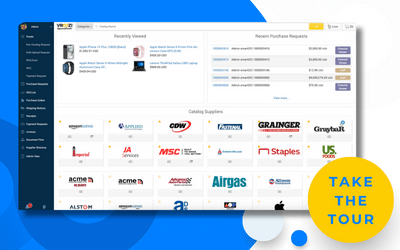
Vendor Catalogs and eMarketplace Integration
For transactional vendor purchases, digital catalogs and marketplaces streamline the buying process.
- Simplified Purchasing: Employees can easily find and buy approved products from preferred vendors, similar to a consumer shopping experience.
- Compliance Control: Pre-negotiated pricing and approved item lists ensure all purchases are compliant, eliminating rogue spend.
Unified Procurement Platforms
The most effective approach is a unified platform that centralizes both vendor and supplier management. For example, Vroozi integrates directly with ERP systems like SAP, Oracle, Netsuite and others, allowing you to manage your entire procure-to-pay lifecycle without disrupting your core financial system. This gives you complete visibility and control, whether you’re collaborating with a critical component supplier or ordering office supplies from a local vendor.
Make Your Procurement Strategy Smarter
Whether you’re sourcing strategic suppliers or managing day-to-day vendor purchases, Vroozi’s eProcurement marketplace centralizes every transaction—bringing visibility, efficiency, and compliance into a single digital platform.
Distinguishing between vendors and suppliers is the first step toward building a more intelligent and resilient procurement function. Modern procurement technology like Vroozi provides the visibility and control needed to manage this complexity effectively.
Ready to manage both vendors and suppliers with precision on one modern platform? Schedule a personalized demo of Vroozi to see how our procurement marketplace simplifies strategic sourcing and everyday purchasing.