Category management is one approach to optimizing procurement processes within an organization. Firms implementing category management could reduce risks and achieve more than a 500% return on investment. It is a holistic strategy for planning and purchasing goods and services.
This article explores category management processes and strategies that procurement teams implement.
Key highlights
- Category management organizes procurement around item or service groups, optimizing cross-functional procurement across teams.
- The five category management principles are data-driven decision-making, cross-functional collaboration, stakeholder engagement, supply market knowledge, and driving change.
- Benefits of category management include reduced spending, improved buying decisions, reduced waste, and improved procurement efficiency.
- Procurement categories vary by industry, corporate policies, and market dynamics.
- The steps in implementing category management are to collect data, build a category plan, implement the plan, and evaluate success through KPIs.
Understanding category management
Category management organizes procurement processes around item or service groups. In an enterprise, procurement can often become distributed, with different teams making independent purchase decisions without any attempt to maximize overall savings. Category management segments goods and services so that organizations can optimize procurement cross-functionally. Integrating vendor, stock, and consumption management within a category can benefit different teams.
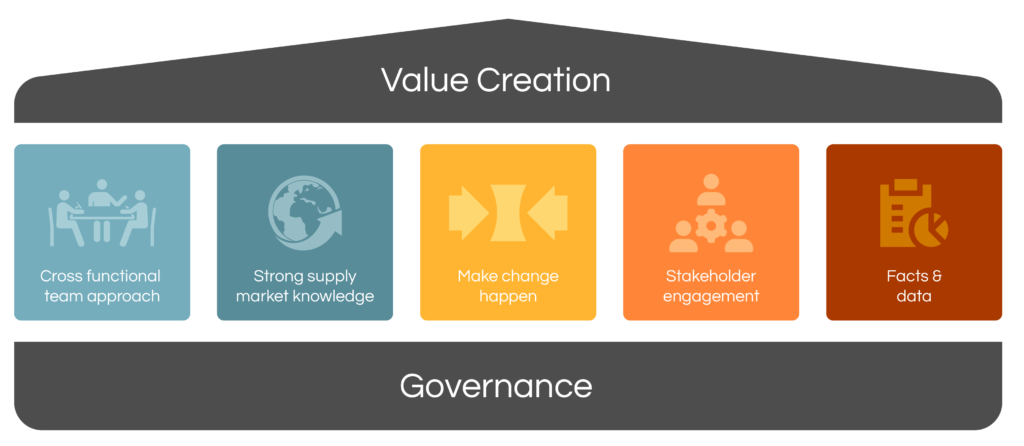
Category management integrates procurement knowledge within a category (Source)
Category management works on five principles:
- Facts and data-based decision-making: Procurement teams use spend analysis, supplier performance metrics, and demand forecasting to make objective purchasing decisions.
- Cross-functional team approach: Finance, operations, and other relevant departments collaborate to align procurement decisions with overall business objectives.
- Stakeholder engagement: Successful category management depends on buy-in from key stakeholders, including internal teams and external suppliers.
- Strong supply market knowledge: Category managers analyze supplier performance, market trends, and global factors to optimize the supply chain for their category.
- Make change happen: Category managers are proactive in driving change, such as by negotiating better contracts, consolidating suppliers, or introducing new procurement technologies.
Example
Consider a car manufacturing company that wants to optimize its procurement of raw materials. It groups them by categories like electronics (sensors, wiring harnesses), interiors (seating, dashboard components), and consumables (lubricants, adhesives). The table below shows how the electronics procurement team implements the category management principles.
| Scenario | Principle |
| The procurement team collects historical spending data and supplier performance reports for all electronic components purchased over the last three years. | Facts and data-based decision-making |
| The team collaborates with finance, production, and quality control to align sourcing decisions with business goals. | Cross-functional team approach |
| Engineers and production managers provide input on technical specifications, while the finance team sets cost-saving targets. | Stakeholder engagement |
| The team discovers that two vendors supply nearly identical car radio parts at significantly different prices. One vendor’s stock is frequently reordered while the other’s remains underutilized. | Strong supply market knowledge |
| The team negotiates volume discounts with the better-performing supplier and phases out the underperforming one. They introduce an optimized order schedule to reduce purchase frequency and prevent excess stock buildup | Make change happen |
Benefits of category management
Category management brings benefits in both spend reduction and operational efficiency.
Reduce spending
Businesses can secure lower prices and improved contract terms by aggregating spend and volume across different departments. For example, a company coordinating IT hardware procurement across all business units can negotiate volume discounts, reducing overall expenditures.
Minimize off-contract spending by ensuring purchases align with negotiated agreements in every category. You can also optimize supplier arrangements using single-source suppliers, preferred vendors, or supplier panels.
Improve buying decisions
Effective category management helps organizations steer buyers away from unnecessary premium products or services. For instance, purchasing IT systems off the shelf rather than opting for expensive custom modifications delivers the required functionality at a fraction of the cost.
You can also:
- Prioritize lower-priced items that meet functional requirements.
- Standardize purchases to reduce variability.
- Explore alternatives and emerging technologies that meet sustainability goals.
Reduce consumption and waste
Category management improves consumption monitoring, helping organizations track usage patterns and make cost-conscious decisions. You can reallocate underutilized assets across departments or reuse materials to optimize inventory management. Shifting the cost burden to business lines increases accountability.
Small but strategic decisions can lead to substantial long-term savings. For example, promoting double-sided printing reduces paper consumption, and using spray instead of squeeze bottles minimizes the liquid supply used.
Improve procurement efficiency
Category management minimizes unnecessary costs and ensures smoother operations. You can reduce procure-to-pay transaction costs related to supplier payments, invoicing, and approvals. Management and administration efforts can also be lowered. For example, standardized office equipment across all departments lowers training and maintenance costs.
Category management also reduces rework by ensuring the right products are sourced the first time. It prevents inefficiencies caused by incorrect orders or poor-quality supplies.
Benefits of category management (Source)
Identifying procurement categories
Identifying categories is the first step in category management, but it can quickly become overwhelming and confusing, especially if there are thousands of purchase transactions a year. One approach is to analyze and sort transactions until categories emerge.
You can classify items based on demand, vendor relationships, purpose, functionality, and more. Category structure varies depending on industry, corporate policies, and market dynamics.
Some organizations prefer to follow standardized classification systems like the UN Standard Products and Services Code (UNSPSC), while others develop their own internal taxonomies. For example, they organize categories by high-impact to low-impact expenditure, vendor, or legal/regulatory requirements.
Common procurement categories include:
- IT
- Professional services
- Medical services
- Human resources
- Security
- Transportation
You can also organize categories based on direct and indirect spending. Direct procurement covers raw materials for manufacturing, while indirect procurement includes services like consulting and utilities supporting business operations.
Implementing category management
We outline a series of steps in category management. However, it is important to note that it is not a linear process. Instead, category managers typically discover information in one area and revisit another iteratively to make change happen. They must develop a range of skills and knowledge and use them to identify market information, stakeholders, spending, and cost and value drivers for strategic decision-making.
Collect data
Category managers collect data from various sources, including analytics tools, procurement tools, other stakeholders, and business goals. They also conduct market research and analyze trends and patterns. The goal is to collect sufficient data to identify gaps or areas for improvement and make data-driven decisions to optimize category spending.
Build a category plan
A category plan is a documentation that outlines
- Stakeholder requirements
- Category targets
- Opportunities and their prioritization
- Resourcing
- Scheduling tasks related to change implementation.
Category plans can be developed for the short-term (quick wins) or medium to long-term (1 – 5 years). At this stage, you can also establish key performance indicators (KPIs) to measure the success of your category strategies.
Implement plan
The category manager performs the tasks outlined in the plan, such as implementing compliance measures, negotiating contracts, educating buyers/vendors, and identifying preferred suppliers. The goal is to create an efficient and sustainable supply chain that aligns with the organization’s objectives.
Evaluate plan
It is important to continuously evaluate KPIs and measure ongoing success in the category. You can also continue collecting category management pillar data to refine your approach as market changes and business needs evolve.
FAQs about category management
What are the categories in procurement?
Categories in procurement refer to groups of related goods or services that organizations buy. These groups are classified based on characteristics such as function, supplier type, or use within the business, enabling better management and strategic purchasing.
What is procurement category hierarchy?
Procurement category hierarchy is a structured approach to categorizing goods and services within an organization. It typically starts with broad categories, which are further divided into subcategories. This structure makes managing sourcing strategies, supplier relationships, and spending analysis easier.
What are the KPIs for category management?
Key performance indicators (KPIs) for category management include cost savings, supplier performance, spending under management, inventory levels, contract compliance, and supplier innovation. These metrics help track the success of category strategies in achieving procurement goals.
What is category strategy in procurement?
Category strategy in procurement is a plan that outlines how an organization will manage and optimize its purchasing activities for a specific category. It involves analyzing market trends, identifying potential suppliers, setting goals, and developing long-term strategies for cost reduction and value creation.
What is category management vs. strategic sourcing?
Category management is a holistic approach to procurement that focuses on specific categories of goods or services over time. On the other hand, strategic sourcing is a process focused on finding and selecting suppliers for specific purchasing needs. While category management involves ongoing optimization, strategic sourcing typically addresses one-time procurement decisions.
How can Vroozi help with category management?
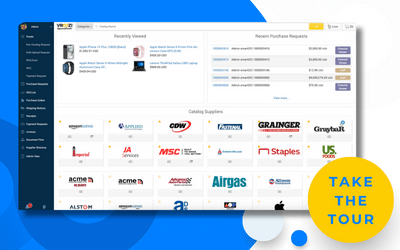
Vroozi’s SpendTech® platform is an all-in-one solution for procurement at scale. It digitizes the procurement and vendor invoice management processes to remove silos and access all procurement data from within a single system. Category managers can leverage Vroozi’s AI and ML capabilities to analyze the data and make informed decisions to optimize their category.
With Vroozi, procurement leaders can:
- Drive employees to a central digital marketplace to purchase from contracted suppliers.
- Enforce compliance with purchasing policies and sustainability initiatives with integrated approvals for their category.
- Guarantee category items are intelligently coded to the right accounting object.
- Collect and access all category data from a single system.
- Generate automatic and electronic purchase orders for suppliers
- Automatically collaborate with finance for working capital, invoice processing, and order management.
Book a personalized demo and discover how Vroozi can optimize your categories today!