As a procurement leader, you must build a strategy and lay a path that leads your organization to a more profitable financial environment. Unfortunately, procurement risks are strewn across your path, waiting to derail your plans.
The best way to press forward and avoid these procurement risks is to identify them and design a strategy to circumvent them. Are you wondering how? There are five common procurement risks to watch out for and proven ways to protect against them.
What are the biggest procurement risks?
Procurement risks can lead to company-wide losses, damaged supplier relationships, delayed growth plans, and more. By identifying risks and getting ahead of them, procurement teams can improve their strategies and march past their goals. Here are some of the biggest procurement risks to consider:
1. Poor analysis of the organization’s spend
Everything from manual input errors to rogue spending to inefficient processes can feed procurement leaders inaccurate information—or restrict their spend visibility altogether. Without clear, accurate spend data, procurement can’t identify the organization’s needs, and that could mean your company hemorrhages money indefinitely or misses opportunities to boost its bottom line.
2. Inefficient contract compliance
Too often, a procurement team will spend weeks or months negotiating contracts only to have employees purchase from unapproved vendors. If employees aren’t taking advantage of contracts, it could cost your company money and stop procurement from realizing a contract’s full value. It also likely means spending data for those unapproved purchases is escaping your digital systems, making it difficult to use those spending details to inform strategic decisions.
3. Inefficient supplier performance visibility
To make the most advantageous sourcing decisions possible, you need to see how your suppliers compare and how they’re performing. However, you may not have access to detailed supplier performance figures. That can blindfold you and cause your team to renew the wrong contracts, miss out on new supplier opportunities, and contribute to company losses.
4. Supply chain disruptions
It’s common for inefficient procurement processes to force procurement leaders to spend more time handling tasks rather than focusing on strategic plans. That can turn into a major risk when supply chain disruptions shake the business. Preoccupied procurement teams don’t have the time to identify opportunities and build procurement resilience. As a result, your company can be blindsided by supply chain changes, run into prolonged inventory problems, and incur extra long-term costs.
5. Inaccurate spend data and poor strategic decisions
Even if your team has plenty of spend data at its fingertips, that information could be riddled with inaccuracies. If your company’s procure-to-pay (P2P) processes involve manual input, it’s easy for employees to make errors. Those mistakes can send your team veering off track and cause poor strategic decisions that hurt your company’s bottom line.

How can you overcome the most pressing procurement risks?
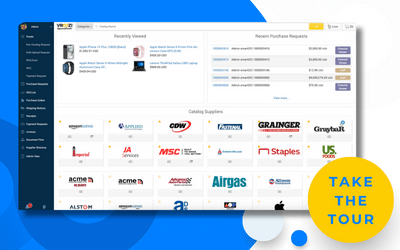
One of the easiest ways to avoid these five procurement risks is to adopt advanced spend management technology, or SpendTech™. This technology includes procurement solutions that digitize your procure-to-pay (P2P) process, simplify purchasing, increase spend visibility, and free up procurement professionals for more strategic work. Here are a few ways this type of technology can help procurement teams cut down risks and accelerate spend management plans:
Increase spend visibility.
Advanced SpendTech™ will include a user-friendly digital marketplace that employees can use to purchase through approved suppliers. In addition to ensuring employees use pre-negotiated contracts, this feature increases spend visibility and spend under management by encouraging employees to purchase through approved suppliers. In turn, procurement can see how the organization is spending, where money is flowing, which opportunities to cash in on, and what decisions to make to improve spending.
Build supply chain resilience.
When spend data is clear, accurate, and abundant, it’s easier to evaluate supplier performance and identify strategic decisions to build supply chain resilience. With advanced reports in hand, it’s possible to plot a strategy that improves inventory levels, increases delivery speeds, avoids shortages, or achieves other supply chain advantages.
Identify your organization’s spending weaknesses and needs.
With more accurate spending data at your fingertips, you can see spending weaknesses and areas where the company needs to shift purchasing habits. The result is a clearer path to savings and growth.
Improve supplier relationships.
A digital P2P solution can sharpen processes, limit manual work, reduce errors, and speed up payments. In turn, suppliers are paid on time, feel more satisfied, and are more willing to build lasting relationships with your company.
Manage spend more efficiently.
SpendTech™ captures spend data and lays out clear spending reports. That way, procurement teams can analyze supplier performance, see what contracts yield the best results, and manage spend more efficiently.
Start planning now to avoid procurement risks.
Procurement leaders are constantly running into similar procurement risks when they work to secure spending and cost advantages for the organization. However, by taking a hard look at those risks and using modern tools to eliminate them, it’s possible to give your company an edge and fuel growth.
Want to learn more about using technology to surpass your procurement goals? Read “Spend Matters: The Evolution of Corporate Procurement Systems” for an in-depth look at procurement technology and ways to use it to chart a course to faster financial growth.