Navigating the complexities of multiple ERPs can be daunting for any organization. While each ERP system may have been implemented to address specific needs or accommodate growth, the resulting landscape of disparate systems often brings about data silos, inconsistent processes, and limited visibility into overall spend and supplier performance.
Multiple ERPs pose challenges that affect all business functions, but they are particularly impactful in procurement. In this article, we explore the reasons behind the proliferation of multiple ERP systems, examine the specific challenges they present for procurement, and discuss how integrating a P2P platform can help businesses overcome these obstacles.
Why Do Businesses Operate Multiple ERP Systems?
It’s not uncommon for organizations to operate with multiple Enterprise Resource Planning (ERP) systems. While a single, integrated ERP system may be ideal, various factors can lead to multiple systems coexisting within a company.
Mergers and Acquisitions
When companies merge or acquire other businesses, they often inherit the ERP systems used by the constituent parts. Integrating them into a single platform can be time-consuming and costly, leading to the continued use of multiple ERPs in the short to medium term.
Departmental Specialization
Large enterprises with diverse business units may require specialized ERP systems to cater to the unique needs of each department. For example, the manufacturing division might rely on an industry-specific ERP solution that differs from the one used by the finance or human resources departments.
Legacy Systems
Companies may accumulate various ERP systems as they grow and evolve. Legacy systems tend to be deeply entrenched in the organization’s processes, making replacing them challenging, disruptive, and expensive.
Phased Upgrades
Upgrading an ERP system, such as moving from SAP ECC to SAP S/4HANA, is resource-intensive and time-consuming. Organizations may opt for a phased approach to minimize disruption and manage risk, where different business units or subsidiaries are upgraded at different times.
Confronting the Issues of Multiple ERP Systems in Business
Operating with multiple ERP systems poses organizational challenges, hindering efficiency, productivity, and decision-making. These challenges stem from the lack of integration and consistency across different systems, leading to data silos, manual processes, and fragmented workflows.
- Data Inconsistency and Lack of Visibility: When procurement data is scattered across different systems, it becomes difficult to obtain a single, reliable view of spend, supplier performance, and overall procurement activities. Data fragmentation hinders effective decision-making, leading to missed cost savings and wasted optimization opportunities.
- Manual Processes and Increased Risk of Errors: With multiple ERP systems, procurement teams may be forced to manually enter and reconcile data across different platforms. Duplicated efforts reduce efficiency and increase the risk of errors and inconsistencies, leading to inaccuracies and procurement delays.
- Lack of Standardization and Process Fragmentation: Different departments or subsidiaries may follow varying procurement processes, making it challenging to enforce best practices and maintain consistency. Fragmentation results in inefficiencies, compliance issues, and difficulty achieving economies of scale.
- Difficulty in Generating Comprehensive Reports and Analytics: Organizations struggle to consolidate data from different sources, leading to incomplete or inaccurate insights and difficulty in identifying areas for improvement.
- Vendor and Supplier Relationship Management: Inconsistent vendor and supplier data across different systems can make tracking performance, managing contracts, and maintaining accurate records difficult. Fragmentation of supplier management information and manual contract management hinders the ability to make informed decisions, negotiate better terms, and build strong, long-lasting relationships with key suppliers.
Techniques for Managing Multiple ERPs
One approach is to impose a data management layer as a single source of truth for enterprise data. For example, Corporate Performance Management (CPM) solutions excel at integrating data from multiple sources, including different ERP systems. They can help businesses eliminate data silos, provide a unified view of spend data, and reduce the need for manual data entry or reconciliation.
Another approach is establishing strong data governance through processes and technology such as Master Data Management (MDM). MDM involves creating a centralized master data repository that serves as a “golden record” for all other systems to reference. Defining and enforcing data standards and hierarchies helps ensure data consistency and alignment across multiple ERPs.
However, one of the most effective and least complex strategies for managing multiple ERP systems is to leverage third-party solutions—procurement software, for instance—that can integrate with two or For example, if a business operated with deployments of SAP S/4HANA, Oracle NetSuite, and Microsoft Dynamics 365, the procurement solution would integrate with them and provide a unified procurement interface across the organization.
By integrating with multiple ERPs, these platforms standardize and streamline workflows, eliminating the need for manual data entry and reconciliation between systems. They provide a centralized repository for data, enabling better visibility, control, and decision-making.
How a Procure-to-Pay Platform Overcomes Multi-ERP Complexity
A procure-to-pay (P2P) platform like Vroozi streamlines and automates the entire process, from requisition and purchase order creation to invoice handling and payment. Serving as a centralized hub for all procurement activities, it integrates with multiple ERP systems to provide a unified view of procurement data and activities.
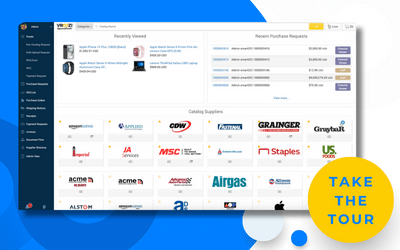
P2P systems offer a user-friendly interface for employees to easily shop, create and submit a purchase requisition via a supplier marketplace. Requisition orders flow through a predefined approval process. Once approved, the platform automatically generates purchase orders and sends them to suppliers electronically.
When goods or services are received, the P2P platform facilitates the creation of goods receipts and the processing of supplier invoices, matching them against purchase orders and receipts. Finally, it can initiate supplier payment based on predefined terms and conditions.
Centralized Data Management
One of the primary advantages of a P2P platform is its ability to centralize procurement data from multiple ERP systems into a single repository. By consolidating data from various sources, the platform provides a comprehensive view of procurement activities, spending, and supplier performance.
Centralized data management enables better visibility, control, and decision-making, as procurement teams can access accurate and timely information without manually reconciling data from different systems.
A Standardized Procurement Process
P2P platforms help standardize procurement workflows, ensuring consistency and compliance with best practices. A unified, user-friendly interface enables employees to follow predefined steps and approval workflows, regardless of the underlying ERP system. Standardization reduces the risk of errors, improves efficiency, and helps maintain consistency in procurement practices across different departments and locations.
Enhanced Visibility and Control
The user-friendly interface, e-commerce-like marketplace, and intuitive procure-to-pay process help employees follow procurement policies and procedures, reducing the likelihood of maverick spend and non-compliant purchases.
As a result, the spend data captured by the P2P platform is more comprehensive and accurate. With more transactions flowing through the system, procurement leaders understand the organization’s spend patterns, supplier relationships, and purchasing behaviors.
The enhanced visibility provided by a P2P platform allows procurement teams to proactively monitor and address potential issues before they escalate. For example, the platform can alert procurement staff to unusual spending patterns or supplier performance issues, enabling them to take timely corrective action.
Procurement Automation
Procure-to-pay platforms automate various procurement processes, reducing manual effort and increasing efficiency. For example, the software can automatically route purchase requests through predefined approval workflows based on factors such as the requester’s role, the purchase amount, and the category of goods or services being procured. Automated routing eliminates the need for manual routing and follow-up, reducing cycle times and ensuring compliance with approval policies.
Similarly, P2P platforms can automate two- and three-way invoice matching by comparing invoice data with purchase orders and goods receipts, flagging discrepancies for review. Account payable invoice automation reduces the risk of errors and fraudulent payments.
In a multi-ERP environment, procurement process automation bridges the gaps between disparate systems and ensures a consistent approach to procurement.
Why Choose Vroozi?
Vroozi is a leading procure-to-pay platform that empowers businesses to overcome the complexity of multiple ERP systems and optimize their procurement processes. Vroozi connects with a comprehensive range of ERP systems and other software, including:
- Oracle platforms such as Oracle EBS, iProcure, PeopleSoft, JD Edwards, and NetSuite
- SAP ERP systems, including SAP S/4HANA, SAP ECC, and SAP SRM
- IBM Maximo
- Microsoft Dynamics 365
Once integrated, users can take advantage of the full range of Vroozi procure-to-pay features, which include:
- An intuitive digital marketplace and supplier portal
- Custom approval workflows
- Procure-to-pay automation
- eProcurement and accounts payable invoice automation
- Powerful spend analytics and reporting
- Digital payments
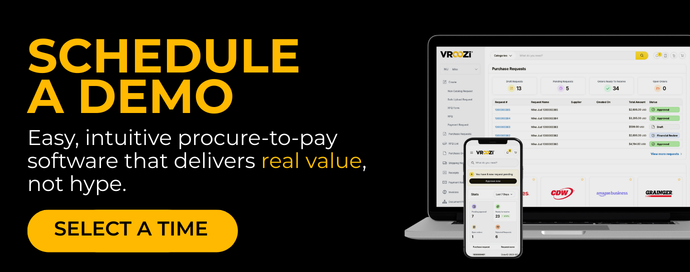
Find out if Vroozi can help your businesses streamline procurement in a multi-ERP environment. Experience a live version of the app, or request a personalized walkthrough from one of our team members.