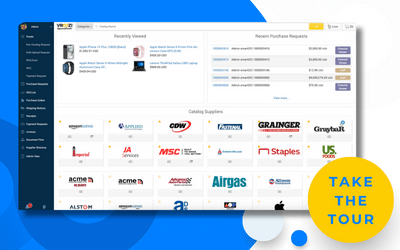
Procurement software has evolved by leaps and bounds in the last few years. Not long ago, businesses were forced to contend with complex, unintuitive procurement management experiences. The software was designed for procurement experts, not the average corporate buyer.
Today, modern procure-to-pay solutions offer intuitive, mobile-friendly procurement experiences that manage and automate the purchase cycle from sourcing to payment.
How can you choose the right option in a rapidly changing space?
This article explores the best procurement software for 2024. You’ll also learn why using an ERP or accounting software for procurement isn’t the best option and what to expect from procurement software. Finally, we’ll look at the current market leaders to help you make an informed decision.
What is procurement software, and what does it do?
Procurement is buying goods and services from external suppliers. It encompasses everything involved in buying, including managing suppliers and their catalogs, selecting products, ordering, receiving and verifying receipt of goods, receiving and paying invoices, and paying suppliers—the activities overseen by procurement and accounts payable professionals.
Procurement software is a broad term covering tools and platforms that digitize, streamline, and add controls around an organization’s buying processes and spending. It focuses on some or all of the sequence of procurement activities from purchasing to payment, aiming to streamline, automate, and improve their efficiency.
Major procurement software modules and capabilities include:
- Supplier and catalog management with integrated supplier marketplace
- Purchasing and invoice approval workflows
- Procure-to-pay automation
- Purchase requisition, purchase order, and receiving management
- Invoice capture, management, and e-invoicing
- Supplier payment
Read more about procure-to-pay fundamentals.
In short, procurement software streamlines procurement and automates the time-consuming, error-prone parts. It ensures procurement data and documents are retained, stored centrally, and available for analysis, all while helping businesses enforce compliance with supplier contracts and procurement policies.
The main benefits of using procurement management software are:
- Cost savings and value creation through increased spending visibility, improved contract compliance, consolidated purchasing power, and process efficiencies.
- Streamlined workflows that reduce manual tasks and paper-based processes across the procurement cycle.
- Enhanced spend control with the ability to track budgets, implement approvals, audit, and enforce procurement policies.
- Improved supplier relationships with insights for managing suppliers, reducing risk, and leveraging procurement to meet sustainability goals.
Do you need dedicated procurement software?
You can interpret the phrase “procurement software” in two ways. The first is any software that provides tools to streamline procurement. The second is dedicated procurement management software with integrated capabilities for a broad spectrum of procurement and supply chain management activities. These are often called procure-to-pay or P2P platforms.
The first group contains several types of software, and many organizations use their procurement capabilities. Your business might use its ERP system or an add-on for its accounting system to manage procurement.
Do you really need to invest in a procure-to-pay solution?
Let’s look at some of the apps and platforms businesses use to manage procurement, their strengths, and their limitations.
ERP software
An ERP (Enterprise Resource Planning) platform integrates various business functions into one system, such as inventory management, accounting, human resources, and customer relationship management. It streamlines operations, improves data accuracy, and supports decision-making by eliminating redundant processes.
ERP platforms can manage procurement, too. SAP ERP, SAP S/4HANA, Sage Intacct, Netsuite ERP, Microsoft Dynamics, and others can be used to manage some aspects of procurement. If you already use SAP S/4HANA for payroll or inventory management, adding procurement might seem the logical next step—especially if you want to collect procurement data in the ERP for analysis.
However, as explained in How Vroozi Supercharges SAP S/4HANA Procurement, ERPs aren’t the best solution for modern procurement.
- ERPs are often challenging to tailor to specific procurement needs without substantial development efforts.
- The user interface tends to be non-intuitive for buyers without a technical background, typically necessitating training.
- ERP procurement often results in low adoption rates among buyers, who may attempt to bypass using the ERP altogether, leading to decreased contract adherence and unmanaged, or “rogue,” spending.
- The experience for mobile users is usually unsatisfactory, if available at all, hindering on-the-go accessibility and efficiency.
A better alternative in 2024 is to use a procure-to-pay platform alongside your ERP. You get the benefits of a purpose-built, customizable procurement software solution. Plus, robust ERP integration ensures procurement data is available to your ERP.
In fact, procure-to-pay platforms’ user-friendly design and automation provide higher-quality data than inflexible and unintuitive ERP procurement solutions.
Accounting software
Smaller businesses often rely on their accounting package’s built-in procurement capabilities. They need the accounting functionality, and it makes sense to use features like purchase order generation and invoice capture, too.
But, that only works to a point. As their business grows, they run into the limitations of relying on accounting software for procurement management.
Most major accounting software packages offer procurement-related features, including QuickBooks Enterprise, Xero, and Zoho Books. However, their capabilities are limited compared to specialist procurement software. They lack advanced catalog management and marketplace features, flexible order approval processes, supplier portal integration, advanced procurement automation, and other procure-to-pay features.
It’s often possible to jury-rig a procurement management solution around accounting software using a combination of extensions, plugins, integrations, and custom code. However, the results will be fragile, prone to failure, and reliant on multiple legacy software vendors.
Specialized procurement software provides a superior alternative. You get everything you need to manage procurement from a single vendor.
Each module is designed to work flawlessly with the others. Data is seamlessly shared throughout the system. And, as we explored in “What Is Procure-to-Pay Automation and How Does It Work,” a cohesive procurement solution presents extensive automation opportunities.
The best procure-to-pay systems provide comprehensive integration with your accounting software: you’ll get more and better data for accounting and spend analysis with an end-to-end procurement solution.

What to expect from the best procurement software in 2024
Procurement software has evolved over the past decade to provide organizations with end-to-end support for their purchasing processes. In 2024, the best procurement solutions offer comprehensive functionality combined with high levels of automation, flexibility, and intelligence. They streamline procurement tasks while optimizing spending and enabling data-driven decision-making.
End-to-end procurement management
You should expect the best procurement software to support the entire procurement process within a unified interface. Core capabilities should include:
- Supplier marketplace with catalog management
- Purchase request creation and approval workflows
- Automated purchase order generation
- Goods and service receipt management
- Invoice processing, approval management, and matching
- Payment approvals workflows and payment processing
Leading solutions centralize all procurement data into a single source of truth while ensuring appropriate controls and oversight at each process stage.
Extensive procurement automation
Cutting-edge procurement tools apply automation, artificial intelligence, and machine learning to simplify complex procurement processes. Key capabilities to look out for include:
- Automatic generation of purchase requisitions and purchase orders with custom fields
- Auto-categorization of spending with your business’s accounting codes
- Automated capture of invoices
- Intelligent routing of approvals and automated approval workflows
Automation eliminates low-value administrative work and enables procurement teams to focus on more impactful initiatives like strategic sourcing and supplier relationship building.
Adaptable to your business’s procurement processes
While delivering extensive in-box functionality, the most effective procurement platforms support an organization’s unique workflows and rules. Configurable platforms allow companies to customize fields, layouts, and workflows within the software, often using no-code drag-and-drop interfaces.
For example, it should be straightforward for businesses to create approval workflows tailored to their organizational needs. Purchase and invoice approvals should be routed to the correct approvers or groups of approvers based on custom rules and thresholds.
Integration with existing systems
Data silos are one of the most significant issues with legacy procurement software. Purchasing and spending data is locked into the platform with no straightforward way to stream it in real-time to ERP, eProcurement, accounting, and other software systems. Silos and lock-in limit the usefulness of procurement data and prevent businesses from adopting the best software solutions.
You should expect a modern procurement solution to provide pre-built connectors for major software suites for easy integration. However, pre-built connectors are unlikely to satisfy every business’s integration requirements. The best procurement solutions also offer an API that allows businesses to access their data in standard formats. Companies can use the API to connect any software and create custom tools.
AI and machine learning
AI and other cognitive technologies, including procurement, are transforming the business software landscape. We’re still in the early days of AI adoption and integration into procurement tools, but some of the AI-powered features to look out for include:
- Machine learning for procurement document capture, including universal invoice capture and processing.
- Classification of spend data into accounting categories for more insightful analysis.
- Procurement fraud detection and prevention.
- Natural language interfaces for procurement management and automation capabilities.
Native mobile features
Legacy procurement software rarely provides adequate mobile functionality. In 2024, you should expect procurement data and workflows to be available wherever you need them, whether in the office or out in the field. You should be able to use supplier marketplaces and goods receipt functionality on mobile devices in warehouses or on the factory floor, access spend data and analytics in meetings, and handle purchase and invoice approvals from any device in any location.
Spend analytics and reporting
Spend analytics capabilities help companies to gain visibility and control over their spending. A modern procure-to-pay system centralizes data points like purchase orders, invoices, payments, spend amounts, categories, and suppliers. It provides tools to analyze and visualize spend data to identify cost reduction opportunities, improve supplier performance, leverage negotiated rates, and drive other procurement efficiencies.
The Best Procurement Software in 2024
Only a few procurement software solutions have the capabilities discussed in the previous section. Every business has unique procurement needs, so it’s worth evaluating market leaders before making a decision.
Vroozi
Vroozi is a cloud procure-to-pay software platform that empowers businesses to streamline, optimize, and reduce the cost of sourcing and procurement. Vroozi’s modular system incorporates a comprehensive range of integrated procurement solutions, including:
- A digital supplier marketplace supporting supplier static and punch-out catalogs
- eProcurement with ERP integration
- Purchase order automation
- AP invoice automation
- Digital payments
- Integration with financial and ERP software
SAP Ariba
SAP Ariba is a cloud-based procurement solution for business-to-business transactions. It provides a suite of procurement management tools, including procurement automation, catalog management, invoice management, and payment solutions. SAP Ariba integrates well with other SAP platforms.
Coupa
Coupa Software is a cloud eProcurement platform for Business Spend Management (BSM) that streamlines spend control, purchasing, and accounts payable processes. Its procurement module supports creating purchase orders, tracking spending, and managing supplier contracts. With its modern, user-friendly interface, you can expect extensive analytics capabilities.
GEP Smart
GEP Smart is a cloud-based procurement software that streamlines the source-to-pay process, integrating sourcing, supplier management, and procure-to-pay functionalities into a single platform. It is designed to facilitate procurement operations by automating workflows, from creating requisitions to managing purchase orders and processing invoices.
Experience Vroozi Today
Vroozi offers a complete procure-to-pay solution with extensive procurement automation capabilities, robust integration, and versatile customization options. If you’d like to see Vroozi in action, take a look at our product demo or get in touch for a personalized tour.