The procurement landscape is in a state of flux. Uncertainty looms as new tariffs, supply chain disruptions, and technology challenges make it increasingly difficult to remain competitive and efficient in 2025.
Optimizing your procure-to-pay (P2P) cycle is essential for streamlining procurement and boosting cost savings. By implementing the right industry best practices, you can ensure compliance and build stronger supplier relationships.
We’ll explore seven crucial procure-to-pay best practices, actionable tips for maximizing workflow efficiency, and helpful tools to give you a competitive edge.
7 Essential Procure-to-Pay Best Practices
Procure-to-pay efficiency is most easily achieved through a multi-faceted approach. To optimize procurement and support overarching business objectives, these P2P best practices can serve as a guiding framework for enhancing systems, workflows, and task management.
1. Centralize procurement data and P2P processes
Disparate systems and siloed teams are the antitheses of an efficient procure-to-pay process.
Procurement centralization provides a holistic view of spending and procurement data, saving time, preventing the double-handling of tasks, and ensuring compliance through stricter adherence to procurement policies.
To achieve these desired outcomes, your organization must first establish a central procurement department for managing strategy, policy, and sourcing decisions.
You can further support P2P process efficiency by integrating procurement systems with other business software, such as your ERP or accounting software, and establishing standard operating procedures for all stages of the procure-to-pay cycle.
2. Automate manual tasks with an eProcurement system

Cloud procurement software, also known as eProcurement systems, streamline the requisitioning and purchasing processes to make buying simpler and more streamlined.
eProcurement systems offer many benefits for modern organizations:
- Reduce errors and processing time in your procure-to-pay workflows
- Improve spend analysis by capturing data at every stage of the P2P cycle
- Enforce purchasing from preferred suppliers
- Easily search for goods and services with integrated supplier catalogs
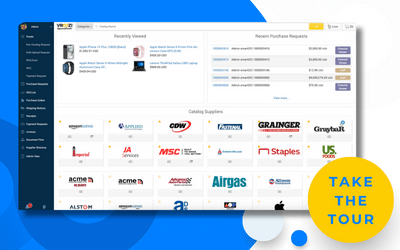
Vroozi’s advanced eProcurement system is a prime example, offering multiple time-saving opportunities by automating key P2P tasks such as invoice processing and purchase order management. You can integrate it seamlessly with supplier catalogs and your financial systems, allowing you to exchange data in real time and effortlessly source and purchase goods and services.
Explore Vroozi for Free: See how eProcurement works with a free interactive product tour
3. Prioritize supplier relationship management and strategic sourcing
Healthy supplier partnerships foster greater reliability and provide leverage to negotiate better contract terms. When you build collaborative relationships with your suppliers, there’s greater potential for joint value creation—resulting in ‘win-win’ scenarios for both parties.
By coupling this with strategic sourcing you give your organization the best chance at mitigating supplier-related risks, enabling you to achieve value that goes beyond the monetary cost of products and services.
Pro Tip: To improve strategic sourcing and build stronger supplier relationships, segment your suppliers based on strategic importance and establish regular performance reviews supported by supplier scorecards and KPIs. Develop category strategies by conducting spend analyses to identify your high-value categories.
4. Use three-way matching to ensure invoice accuracy
Three-way matching—comparing purchase orders and goods receipt notes with supplier invoices—helps ensure you only pay for the goods and services you’ve ordered and received. It adds another layer of fraud prevention and mitigates the risk of invoice discrepancies by ensuring all three documents match prior to payment.
This offers several benefits for organizations:
- Improved supplier relationships. Three-way matching facilitates accurate and timely payments while ensuring discrepancies are addressed quickly and fairly, building trust between you and your suppliers.
- Reduced costs. By preventing overpayments, saving time, and identifying fraudulent invoices, three-way matches also minimize the costs and resources associated with your accounts payable (AP) process.
- Ensure invoice accuracy. Three-way matching validates key invoice data—quantities, prices, and terms—before payment is made.
AP invoice automation software like Vroozi enhances the efficiency of three-way matching, providing further procure-to-pay advantages by automatically validating, matching, and coding invoices to save time and minimize the risk of errors.
5. Regularly review and renegotiate payment terms
As a buyer, your relationships with suppliers will change and grow over time—and so should your supplier contracts. Regularly assessing your payment terms against supplier performance and the needs of your organization helps keep the procure-to-pay process smooth and cost-effective.
Leverage historical data to negotiate existing contracts and achieve more favorable terms that support your overall business objectives. By strategically aligning payment terms to maximize cash flow, you’ll be in a better position financially and at less risk of running out of capital when you need it.
6. Leverage real-time reporting and data analytics
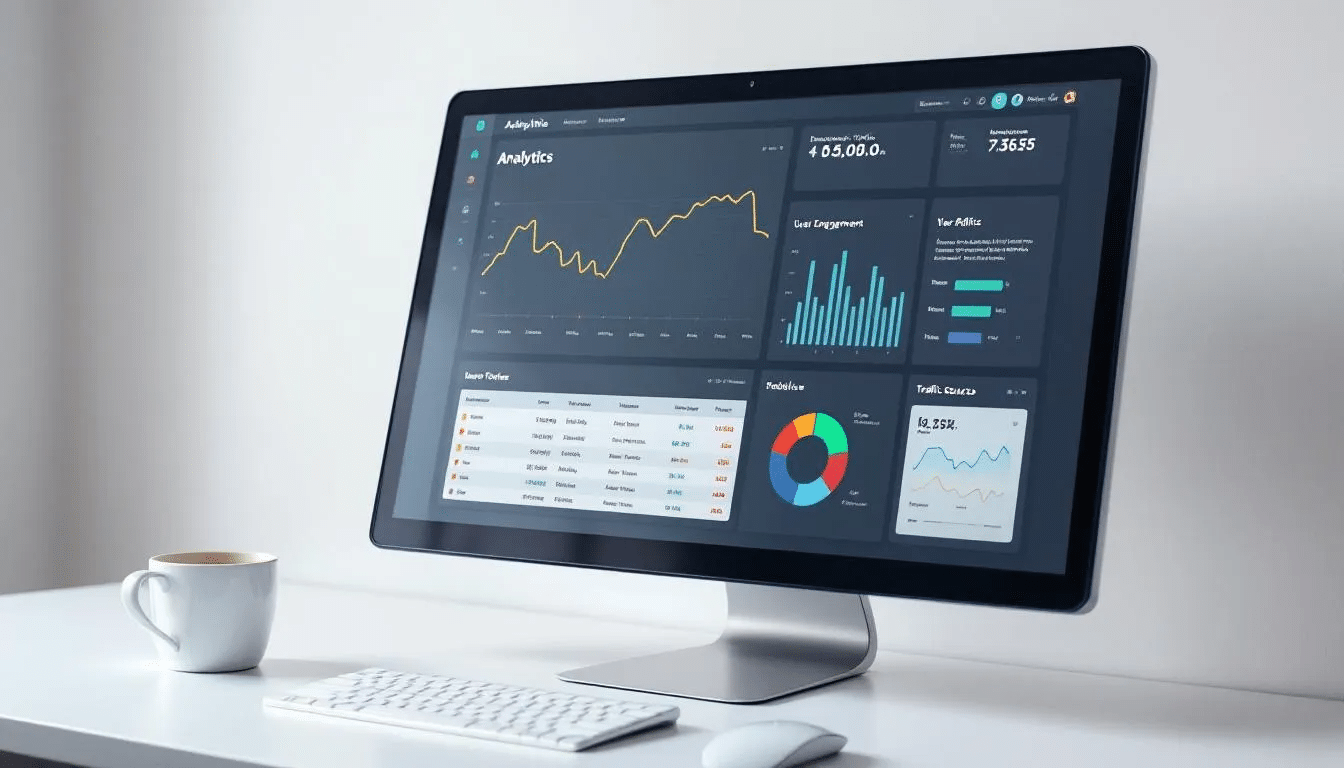
Accuracy and visibility of spend performance data are essential for optimizing procure-to-pay processes. It provides valuable insights into spending patterns, supplier performance, and compliance that help you make informed, strategic procurement decisions.
Use real-time spend management software to track KPIs and capture data throughout every stage of your P2P cycle—from requisition to payment. Regularly review performance reports and analyze bottlenecks and opportunities through root cause analyses to ensure maximum P2P efficiency.
7. Establish clear P2P policies and invest in staff training
Policies and training are what ensure consistency and compliance in your procure-to-pay process. It’s not enough to have the right tools, processes, and technology to support your procurement strategy—there needs to be clear rules and expectations driving their usage.
P2P policies are guidelines that enforce accountability and help mitigate risk. They define key roles and responsibilities, including approval hierarchies, and should be supported by regular audits to ensure compliance.
Make your policies easily accessible to all staff and develop comprehensive training programs that equip employees with the knowledge needed to perform their roles. Provide ongoing support and resources and be proactive in communicating any updates to company policies.
Streamline your procure-to-pay process with Vroozi
An efficient procure-to-pay process requires strategic planning and a centralized system that enforces policy adherence and best-practice procurement. The myriad P2P inputs needed to keep your organization operating at full capacity need an agile solution, or else you risk underperforming or making poor sourcing decisions.
Vroozi is an AI-powered procure-to-pay software that optimizes every step of your P2P cycle. The platform automates time-consuming tasks, such as spend analysis, invoice processing, and requisition, while acting as a centralized data hub that can be accessed at any time by key stakeholders. Schedule a free demo today to see for yourself how Vroozi helps you save time, money, and effort in your procure-to-pay process.