Does your organization use multiple NetSuite entities? It could be holding your procurement teams back. When businesses use multiple NetSuite entities, it fragments spend data, makes it difficult to see the full picture of your organization’s finances, and causes more work for you. Here’s a look at the biggest challenges hitting businesses that use multiple Netsuite entities and the best ways to solve them.
How Multiple NetSuite Programs Hold Back Procurement and Purchasing
Here are a few ways using multiple NetSuite programs may be disrupting your procurement and purchasing teams’ workday:
They make it nearly impossible to unify spend data.
If your organization handles multiple currencies, operates in different tax jurisdictions, or juggles different accounting standards, your NetSuite programs are gathering mismatching data. That makes it difficult to consolidate your financial reports and plan out a growth strategy.
Your risk of compliance and tax missteps rises.
If your organization uses multiple NetSuite systems, each system may operate under different regulatory requirements. Keeping up with rules and managing multiple systems is a challenge. If a rule changes, you may need to update multiple systems—making it even more difficult to manage risk.
Spend visibility and reporting are blurry.
NetSuite programs will all include reporting, but spending may also be split into different categories—varying from one entity to the next. When it comes time to combine spend reports and plan for the future, these mismatching categories dilute your spend data—making it difficult to plot out a sound strategy.
Changes throw off alignment.
When you use multiple NetSuite entities, changing one part of the organization often requires updates across all other entities. That can trigger an avalanche of new training, process adjustments, and new work throughout the organization.
Disconnected systems hold up growth.
When you have fragmented systems, it’s difficult to scale because your system changes don’t move in concert. More often, a few NetSuite entities will be updated as the business expands, and others are left outdated.
How to Roll NetSuite Programs into a Single Purchasing Portal
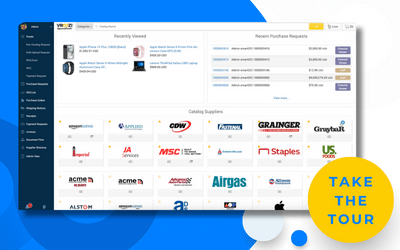
There’s an easy way to consolidate your NetSuite programs: adopt SpendTech™. A SpendTech solution draws in financial data from across your multiple NetSuite programs and wraps all your spend data into one single source of truth.
Here are a few ways these procurement solutions boost the value of your NetSuite programs:
1. Streamline your procurement processes.
SpendTech provides a single purchasing portal all employees can use to complete transactions. That means anyone can browse through approved suppliers and easily make purchases. In turn, spend data is streamed into a single system—and procurement can see a full picture of spend data.
This approach also allows procurement to manage approved and preferred suppliers across the entire organization. Since they have access to local and centralized supply sources, it’s easier to spend more strategically—and build more leverage for negotiations with suppliers.
2. Widen and deepen spend visibility.
Often, an organization will use multiple systems to purchase the same product—but each system may categorize a product differently. For instance, a system may list a different part number for a product that has the same use across the organization. As a result, you can’t see how much you’re spending, where money is flowing, and what strategic opportunities are out there. It also makes it difficult for purchasing to rationalize a part’s use and see what they need to see in order to justify purchases.
With SpendTech, you use a single digital marketplace to make purchases. That way, SpendTech consolidates spend and financial data, organizing it into a common set of products and categories. That widens your spend visibility and makes it easier for leaders to plan for growth, stay under budget, and map out a clear procurement strategy. By linking up the data throughout all your NetSuite systems, you see how you’re spending at both a local and aggregate level so your teams can realize strategic sourcing opportunities.
3. Easily integrate your NetSuite programs.
Top-tier procurement solutions easily integrate NetSuite without extra training or technical support. Rather than piecing together separate systems on a case-by-case basis—and dealing with the chaos that comes with those changes—you can easily consolidate all of your NetSuite programs in one go. This ensures that high-quality, consistent data flows across all your organization’s systems.
It also simplifies spend and supplier management.
With a single SpendTech Marketplace, leaders who work with different systems gain access to the same company-wide set of contacts. At the same time, they can still purchase through local suppliers when the price is more attractive. That makes it easier to manage both centralized and decentralized processes and supply sources.

4. Gain more spend control and improve compliance.
When all your purchases are flowing through a single portal, your spend under management increases. Ultimately, it gives you more control over spending. In turn, your team can manage more approval workflows, enforce policies more thoroughly, and ensure purchases follow the important guidelines you’ve set up.
5. Scale with ease.
SpendTech weaves together your NetSuite systems and packages them into one scalable, configurable solution. That way, you can adjust the platform to the needs of each of your entities within the organization as it grows.
6. Manage suppliers more efficiently.
Advanced procurement solutions don’t just consolidate and improve spend data. They also include supplier management tools your team can use to manage contract compliance, keep track of supplier information, and strike better deals across all your departments.
7. Work from anywhere.
Advanced SpendTech allows you to manage NetSuite data on a mobile platform. That means your team can make purchases and manage procurement from anywhere. As a result, employees use this solution more often, user adoption rises, and spend under management increases even more.
8. Cut down manual work and reduce errors.
Once all of your NetSuite programs work as one unit, SpendTech also automates work. It cuts out repetitive tasks, reduces manual work, minimizes errors, and increases your team’s efficiency.
Break Open Purchasing and Procurement’s Biggest Bottlenecks
Consolidating your NetSuite entities is an important way to open up new procurement opportunities—but it’s just the tip of the iceberg. Take a Vroozi product tour to see how an automated procurement solution can help you drive down costs, reduce work, and map out a smarter procurement strategy.